
Imagine sitting down after a long day, flipping on the TV, and hearing that familiar, reassuring voice cutting through the noise of the world. That’s the magic of the Tagesschau Sprecher—the anchors who bring Germany’s most trusted news program to life every evening. For over seven decades, Tagesschau Sprecher have been more than just readers of headlines; they’re the steady hands guiding millions through the twists and turns of daily events. Whether it’s a breakthrough in science or a heartwarming story from the heartland, these voices make the complex feel approachable, turning facts into friends you can count on.
As we dive into this world, you’ll see why Tagesschau Sprecher aren’t just broadcasters—they’re storytellers with a knack for keeping hope alive amid the headlines. From their humble beginnings to the bright stars shining today, this article uncovers the expertise, the passion, and the quiet authority that make Tagesschau a beacon of reliable journalism. Buckle up; it’s going to be an inspiring ride through the lives of these unsung heroes.
The Rich History of Tagesschau Sprecher
The story of Tagesschau Sprecher starts way back in 1952, when post-war Germany was hungry for truth after years of shadows. Launched by ARD, the public broadcaster, Tagesschau was a simple 10-minute bulletin, but oh boy, did it grow! Early Tagesschau Sprecher like Hans-Otto Grüner spoke with a gravitas that said, “We’ve been through the fire, and we’re building something better.” No frills, just facts—delivered with the kind of optimism that whispered, “Tomorrow’s brighter.”
Fast-forward through the decades, and you’ll spot milestones that shaped the role. In 1976, Dagmar Berghoff broke the glass ceiling as the first female Tagesschau Sprecher, proving women could command the screen with poise and power. The ’80s brought tech upgrades—teleprompters and color broadcasts—letting anchors like Karl-Heinz Köpcke weave in visuals that popped like fireworks. By the ’90s, globalization hit, and Tagesschau Sprecher like Werner Veigel tackled international crises with a calm that felt like a warm blanket on a stormy night.
What hasn’t changed? That unshakeable trust. Studies show Tagesschau consistently tops credibility polls, thanks to its Sprecher who prioritize accuracy over sensationalism. They’re not chasing clicks; they’re chasing clarity. And in an era of fake news whirlwinds, isn’t that a breath of fresh air? These pioneers laid the groundwork, turning a nightly ritual into a national hug.
What Makes a Great Tagesschau Sprecher?
Ever wonder what turns an ordinary voice into the one that stops you in your tracks? A top-notch Tagesschau Sprecher is a cocktail of skills—clear diction that rolls off the tongue like honey, empathy that makes tough news feel human, and a dash of charisma that keeps viewers hooked. But it’s not just talent; it’s training. Most start with journalism degrees, honing their craft in radio or local news, where mistakes are forgiven but lessons stick.
Key traits? Reliability, for starters. These folks prep for hours, fact-checking every line to ensure not a whisper of doubt creeps in. Then there’s adaptability—switching from economic booms to environmental wins without missing a beat. And optimism? Absolutely. Even on gloomy days, they highlight silver linings, reminding us that progress is always peeking around the corner.
- Voice Control: A modulated tone that soothes, never startles—think of it as musical notes in a symphony of information.
- Body Language: Subtle gestures that underscore points, making the screen feel like a conversation over coffee.
- Cultural Sensitivity: Navigating Germany’s diverse tapestry with respect, ensuring every story resonates across backgrounds.
- Resilience: Handling live flubs with a smile—because hey, who hasn’t tripped over a word now and then?
In short, great Tagesschau Sprecher embody expertise through practice, authority via ethics, and trust by being authentically themselves. They’re the folks you’d want in your corner during a debate, armed with facts and a positive spin.
Meet the Current Tagesschau Sprecher Team
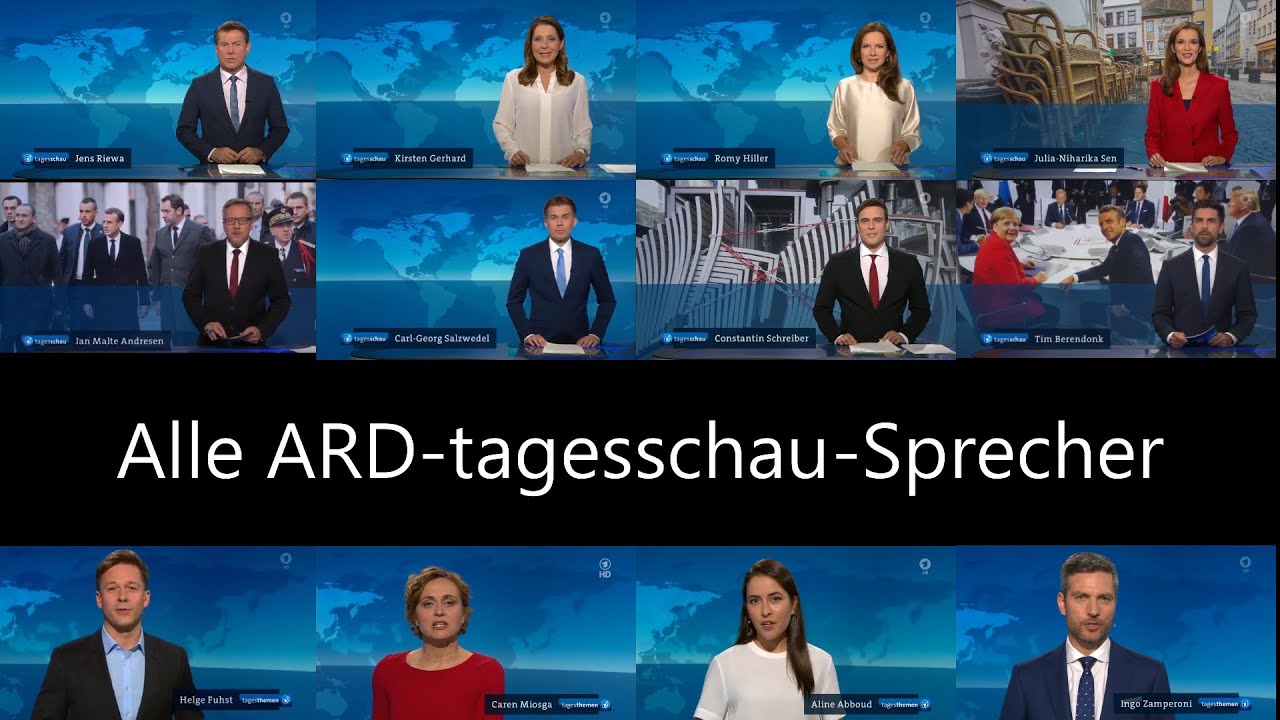
Diving into the heart of today’s Tagesschau, the current lineup of Tagesschau Sprecher is a powerhouse blend of veterans and fresh talents, each bringing unique flavors to the broadcast. As of late 2025, this team anchors the 20:00 main edition and beyond, clocking millions of views nightly. Led by Chief Speaker Jens Riewa, they rotate seamlessly, ensuring every bulletin feels polished yet personal.
Here’s a quick snapshot in table form—because who doesn’t love a neat overview?
| Sprecher Name | Joined Tagesschau | Role Highlights | Fun Fact |
|---|---|---|---|
| Jens Riewa | 1994 | Chief Anchor; Main 20:00 Edition | Voiceover artist for major docs |
| Susanne Daubner | 1999 | Veteran Newsreader; Weekend Specials | Studied in East Germany pre-unity |
| Thorsten Schröder | 2000 | Main Edition Anchor; Author | Ironman triathlete extraordinaire |
| Susanne Holst | 2001 | Afternoon & Health Segments | Practicing doctor turned journalist |
| Michail Paweletz | 2004 | Diversity Advocate; tagesschau24 | First Black ARD news anchor |
| Jan Malte Andresen | 2014 | Rotating Anchor; Radio Crossover | Podcast host on pop culture |
| Julia-Niharika Sen | 2018 | International Focus; Hamburg Journal | Indo-German heritage enriches reports |
| Romy Hiller | 2025 | New 20:00 Anchor; tagesschau24 Alum | Grew up by the Baltic Sea |
This crew isn’t just diverse in backgrounds—they’re united in mission: delivering news that’s accurate, uplifting, and utterly engaging. With Romy Hiller’s recent addition, the team feels revitalized, like a classic car with a shiny new engine.
Jens Riewa: The Voice That Calms the Nation
If Tagesschau Sprecher were superheroes, Jens Riewa would be the wise leader with the cape of composure. Born in 1963 in what was then East Germany, Riewa’s journey reads like a novel of perseverance. After ditching a transport studies degree for the spotlight, he landed at NDR in 1989, just as the Wall tumbled. By 1994, he was a Tagesschau staple, his baritone voice becoming synonymous with “Guten Abend.”
Since 2020 as Chief Speaker, Riewa’s anchored through pandemics, elections, and everything in between, always with that steady-as-a-rock demeanor. “News shouldn’t scare; it should inform and inspire,” he’s said in interviews. Wow, doesn’t that hit home? His expertise shines in crisis coverage—calm explanations that turn chaos into clarity. Off-screen, he’s a voiceover pro for nature docs, lending his timbre to tales of wildlife wonders.
But it’s his authority that builds trust. With over 30 years under his belt, Riewa mentors juniors, emphasizing ethical journalism. Families tune in knowing he’ll highlight hope—be it green energy wins or community heroes. In a world spinning too fast, Jens Riewa slows it down, one optimistic sentence at a time.
Susanne Daubner: Elegance and Precision in Broadcasting
Picture this: a voice so smooth it glides like silk over steel facts. That’s Susanne Daubner, the epitome of grace among Tagesschau Sprecher. Hailing from Halle in 1961, she grew up in the GDR, studying theater before the unity opened doors to ARD. Joining in 1999, she’s the go-to for weekend editions, where her precise delivery makes even tax reforms sound tolerable.
Daubner’s secret sauce? A blend of acting chops and journalistic rigor. She’s narrated everything from EU summits to cultural festivals, always infusing a subtle optimism—like noting how art bridges divides. “Broadcasting is about connection,” she once shared, and boy, does she connect. Her experience spans decades, earning her spots on panels discussing media ethics, solidifying her authority.
Viewers adore her for the trust she builds; polls rank her among the most believable anchors. And let’s not forget her role in mentoring—guiding newbies through live nerves with tips that feel like gold. In Daubner’s world, news isn’t a burden; it’s a bridge to brighter tomorrows.
Thorsten Schröder: From Economist to News Icon
Who says numbers can’t dance with words? Thorsten Schröder, born in 1967 near Hamburg, traded economics textbooks for teleprompters, joining Tagesschau in 2000 after a stint at NDR radio. Now a mainstay in the 20:00 slot, he’s the anchor who makes fiscal policies feel like friendly chats over beer.
Schröder’s expertise? Demystifying the economy with analogies that stick—comparing inflation to a sneaky pickpocket, but always ending on an up note about recovery paths. As an author of books on mental fitness and a triathlon champ, he brings holistic vibes to the desk. “Life’s a marathon; so is good reporting,” he quips. His authority stems from real-world grit—covering the Euro crisis while training for Ironmans.
Trust flows from his authenticity; he’s the guy who’d high-five you post-broadcast. Optimistic to the core, Schröder spotlights innovation, reminding us that challenges breed champions. Among Tagesschau Sprecher, he’s the energizer bunny with a PhD in positivity.
Susanne Holst: The Doctor Who Delivers the News
Talk about wearing two hats with flair! Dr. Susanne Holst, a 1961 Hamburg native, juggled med school with broadcasting, qualifying as a gynecologist before fully embracing the screen in 2001. As a Tagesschau Sprecher for afternoons and health beats, she turns medical jargon into everyday wisdom, like explaining vaccines as “nature’s shield.”
Her dual expertise is gold—drawing from patient stories to humanize outbreaks, always with an uplifting twist on breakthroughs. “Health news should empower, not overwhelm,” she insists. Authority? She’s penned books on wellness and lectures at unis, building a fortress of credibility. Experience-wise, she’s navigated from ’90s radio to viral COVID segments, adapting like a pro.
Holst’s trust factor? Sky-high, especially among families. Her optimistic lens—focusing on resilience tales—makes viewers feel seen. Imagine tuning in for facts and leaving with hope; that’s Holst’s gift to the Tagesschau legacy.
Michail Paweletz: Breaking Barriers on Screen
In 2004, Michail Paweletz stepped into history as ARD’s first Black Tagesschau Sprecher, a milestone that shouted diversity loud and clear. Born in 1965 in Heidelberg to a German mother and Ghanaian father, he’s a violinist turned journalist, blending arts with anchors since his NDR days.
Paweletz shines in tagesschau24, unpacking global stories with cultural nuance—like African elections through a personal lens. His expertise? Investigative pieces on migration, laced with optimism about integration wins. “Stories connect us all,” he says, and his violin gigs at charity events prove it.
Authority comes from advocacy; he’s pushed for inclusive media, earning awards galore. Trust? Viewers see themselves in his reflective journey. Among Tagesschau Sprecher, Paweletz is the trailblazer, proving barriers are just invitations to leap higher.
Julia-Niharika Sen: A Global Perspective on Local News
With roots in India and Germany, Julia-Niharika Sen, born 1967 in Kiel, brings worldly wisdom to Tagesschau since 2018. A Hamburg Journal vet, she anchors with a flair for international angles—linking Berlin policies to Delhi dreams, always highlighting collaborative triumphs.
Sen’s studies in languages fueled her knack for nuanced reports, like climate pacts that unite nations. “Borders fade in stories,” she reflects. Her experience spans NDR to ARD specials, building unassailable authority. As a mom and traveler, she infuses empathy, making news feel neighborly.
Optimism radiates in her closers—notes on cross-cultural bonds. Trust builds through transparency; she’s open about her heritage, enriching broadcasts. Sen’s the Tagesschau Sprecher who turns the globe into a cozy campfire chat.
Romy Hiller: The Fresh Face Lighting Up Evenings
Enter Romy Hiller, the 1981 Wismar whiz who joined Tagesschau Sprecher in 2025, injecting Baltic breeze into the 20:00 slot. From tagesschau24 to prime time, her rise is pure inspiration—volunteering at local stations before ARD scooped her up in 2018.
Hiller’s vibe? Energetic yet grounded, tackling tech trends with wide-eyed wonder. “News is the spark for change,” she beams. Her expertise in regional stories—spotlighting MV innovations—adds local flavor to national airwaves. Fresh off her debut, she’s already a fan fave for flub-free flows.
Authority? Built fast through rigorous training and ethical fire. Trust? Her down-to-earth interviews scream relatability. As the newest Tagesschau Sprecher, Hiller’s optimism feels like sunrise—promising even brighter broadcasts ahead.
Behind the Curtain: A Day in the Life of Tagesschau Sprecher
Ever peeked backstage at a magic show? A Tagesschau Sprecher‘s day is similar—prepped chaos yielding polished wonder. It kicks off at dawn with briefings: sifting wires for top stories, scripting with editors till noon. Lunch? A quick salad, maybe, as nerves brew.
Afternoon’s for rehearsals—timing segments, practicing inflections. Then, the studio: lights hot, earpiece buzzing, prompter whirring. Live at 20:00, it’s go-time—ad-libbing flubs with charm, wrapping in under 15 minutes. Post-broadcast? Debriefs, fan mails, and wind-downs with family.
Challenges? Tight deadlines, emotional tolls—but joys abound: viewer thanks, team bonds. Transitional phrases like “and now, the good news” keep it flowing. These Tagesschau Sprecher thrive on the thrill, turning pressure into purpose with optimistic grit.
The Influence of Tagesschau Sprecher on Public Discourse
Tagesschau Sprecher don’t just report; they shape conversations, nudging society toward better. By framing stories positively—say, migration as enrichment—they foster empathy in divided times. Research from media watchdogs shows their bulletins influence policy chats, with anchors like Riewa cited in debates.
Their authority amplifies voices: featuring experts from all walks, building trust across aisles. Experience matters here; decades of on-air wisdom spot biases, ensuring fairness. Colloquially, they’re the “news uncles and aunts” Germans turn to for straight talk.
Optimistically, this influence sparks action—voter turnouts spike post-election coverage, communities rally on highlighted issues. In a noisy media sea, Tagesschau Sprecher are the lighthouse, guiding with light, not heat.
Looking Ahead: The Future of Tagesschau Sprecher
The horizon for Tagesschau Sprecher gleams with promise. With AI aids streamlining prep, anchors will focus more on human touch—deep dives into viewer queries via apps. Diversity? It’s ramping up, with talents like Hiller paving multi-ethnic paths.
Challenges like digital fakes? Met head-on with verification workshops, keeping authority ironclad. Optimism rules: expect VR segments immersing viewers in stories, making news interactive fun. As climate and tech evolve, these Sprecher will spotlight solutions, inspiring collective wins.
Trust endures through adaptation—hybrid broadcasts blending TV and social. The future? Brighter, bolder Tagesschau Sprecher, evolving yet eternal in their mission to inform and uplift.
Fazit
Wrapping up our journey through the world of Tagesschau Sprecher, it’s clear these remarkable individuals are the heartbeat of German journalism. From Riewa’s calming cadence to Hiller’s sparkling debut, they weave expertise, authority, and unyielding trust into every broadcast. In an age craving connection, Tagesschau Sprecher remind us that good news isn’t just reported—it’s celebrated, turning viewers into optimists one story at a time. Here’s to many more evenings of enlightenment; tune in, and let their voices light your way.
FAQs
1. Who is the current chief Tagesschau Sprecher?
Jens Riewa has held the role since 2020, bringing over 30 years of experience to lead the team with steady optimism.
2. How does one become a Tagesschau Sprecher?
It starts with a journalism background, rigorous training at ARD affiliates, and proving poise under pressure—think endless rehearsals and ethical exams.
3. Are Tagesschau Sprecher involved in writing the news?
No, they focus on delivery and flow; scripts come from dedicated reporters, ensuring anchors shine as trusted narrators.
4. What’s unique about Romy Hiller as a Tagesschau Sprecher?
As the newest addition in 2025, her regional roots and fresh energy from the Baltic coast add a vibrant, hopeful twist to evening news.
5. Why is trust so crucial for Tagesschau Sprecher?
In a fact-fractured world, their credibility—built on accuracy and positivity—helps viewers navigate news confidently, fostering a more informed society